


SEO The Business Optimizer
Search Engine Optimization (SEO) refers to the method used to increase a website ranking on search engine results pages...
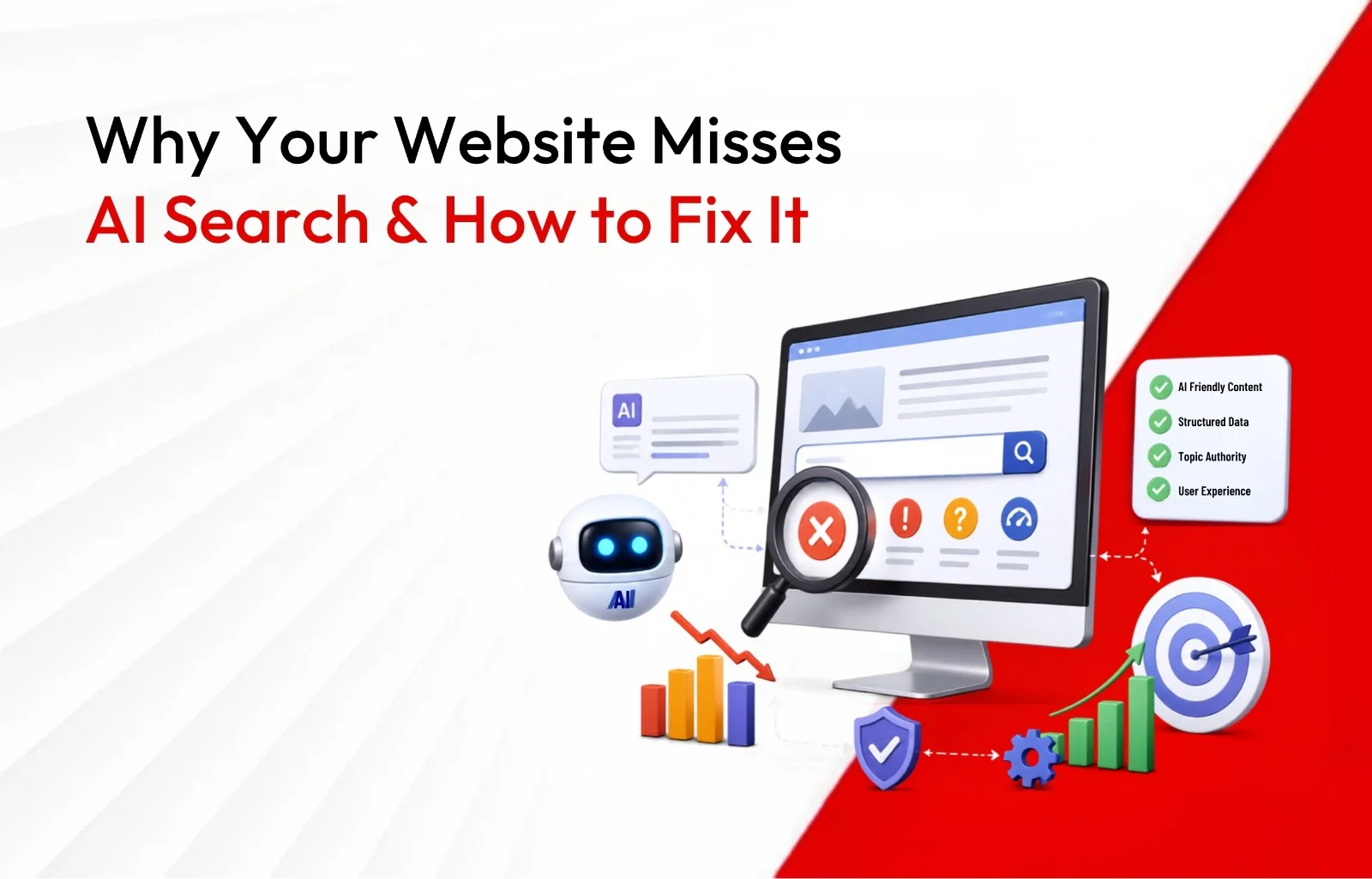
Imagine spending months optimizing your website, publishing blogs regularly, improving rankings, and earning backlinks only to discover that when someone asks ChatGPT a question or searches on Google, your brand is nowhere to be found.
Welcome to the new era of search.
Today, people don't always click through ten blue links. Instead, they ask AI tools direct questions and receive instant answers. Google AI Overviews summarize information before users visit a website. ChatGPT and other AI assistants are increasingly becoming the first stop for information discovery.
The result? Visibility is no longer just about ranking on page one. It's about becoming a source AI trust enough to reference.
If your website isn't showing AI-generated answers, don't panic. It doesn't necessarily mean your content is poor. More often, it means your website hasn't been optimized for how AI systems discover, evaluate, and understand information. Whether you're a startup, an e-commerce brand, or a Website development company in Pune, adapting to AI-driven search is becoming just as important as traditional SEO.
Let's explore why this happens and what you can do to change it.
For years, traditional SEO focused on keywords, backlinks, technical optimization, and search rankings. While these factors still matter, AI-powered search introduces a new layer of competition.
Instead of simply identifying the most relevant webpage, AI systems analyze vast amounts of content and select information that appears trustworthy, authoritative, structured, and easy to understand.
Think of it this way:
Traditional search asks:
"Which website should rank first?"
AI search asks:
"Which source provides the best answer?"
This subtle shift changes everything.
A website might rank reasonably well on Google but still fail to appear in AI-generated responses if its content lacks clarity, authority, context, or structure. AI models prefer information they can confidently interpret and cite.
The brands winning in AI search are not always the loudest. They're often the clearest.
If your website rarely appears in ChatGPT responses or Google AI Overviews, one or more of these issues may be holding you back:
Many websites still create content primarily for search engines.
They repeat keywords, stuff headings with phrases, and focus heavily on rankings.
AI systems don't work that way.
They prioritize content that genuinely answers user questions. If your article explains a topic clearly, addresses related concerns, provides examples, and offers practical insights, AI is more likely to consider it useful.
The future belongs to content built around user intent, not keyword density.
AI models evaluate credibility signals. If your website publishes advice but provides little evidence of expertise, it becomes harder for AI systems to trust the information.
Missing author profiles, lack of company information, no case studies, weak credentials, and limited industry recognition can all reduce perceived authority.
Trust matters more than ever because AI systems aim to minimize misinformation and prioritize reliable sources.
While humans can often make sense of messy or poorly organized content, AI isn't as adaptable. Long, unstructured paragraphs, vague headings, inconsistent formatting, and cluttered page layouts make it harder for AI to understand and extract key information.
Organizing your content with clear headings, concise sections, and a logical flow not only improves readability for your audience but also makes it easier for AI to interpret, reference, and recommend your website.
Publishing just one article on a topic isn't enough to establish your website as an authority. AI platforms look for consistent expertise across a subject rather than isolated pieces of content.
For instance, if you run a digital marketing agency, creating a series of interconnected articles on SEO, content marketing, branding, AI search, analytics, and digital strategy helps demonstrate your knowledge.
The more comprehensive your coverage, the more likely AI is to recognize your website as a trusted source. After all, when it comes to AI visibility, depth always beats randomness.
AI doesn't only analyze your website, it also considers the broader digital ecosystem.
When your brand appears in industry publications, directories, interviews, guest posts, research reports, and reputable third-party websites, it creates stronger authority signals.
The more credible mentions your brand earns across the web, the more trustworthy it appears.
Unlike traditional search engines that primarily rank pages based on keywords and backlinks, AI platforms evaluate content much like a human researcher would. They don't just search for matching words; they look for the most reliable, relevant, and well-structured answer.
Before featuring your website in ChatGPT responses or Google AI Overviews, AI systems assess multiple trust signals. They favor content that demonstrates expertise, provides accurate and updated information, and answers user queries in a clear, conversational manner. Websites that include original insights, credible sources, real-world examples, and comprehensive explanations are more likely to be considered valuable.
Consistency also plays a significant role. A website that regularly publishes high-quality content around a specific niche builds stronger topical authority than one covering random subjects. AI recognizes these patterns and is more likely to trust brands that consistently deliver meaningful information.
Technical factors matter too. Fast-loading pages, mobile-friendly design, clean navigation, descriptive headings, internal linking, and structured data help AI understand your content more effectively. The easier it is for machines to interpret your website, the greater your chances of being referenced.
In simple terms, AI isn't looking for the website with the loudest marketing; it recommends the one that proves it's the most helpful, trustworthy, and relevant source for the user's question.
Many businesses assume they're prepared for AI search because they have an SEO strategy. However, AI visibility requires additional considerations.
Watch for these warning signs:
If several of these points apply to your website, AI platforms may struggle to recognize your content as a trusted source.
The good news is that improving AI visibility doesn't require rebuilding your website from scratch. Instead, it requires aligning your content strategy with the way AI systems discover, understand, and evaluate information.
Here are the most effective ways to improve your chances of appearing in ChatGPT, Google AI Overviews, and other AI-powered search platforms:
Partnering with an experienced Website development company in Pune can also make a significant difference. Beyond creating an attractive website, the right development team ensures your site is technically optimized, fast, secure, mobile-responsive, and structured in a way that both search engines and AI platforms can easily understand.
The objective is simple: make your website so informative, trustworthy, and easy to understand that AI platforms naturally consider it a reliable source.
The rise of ChatGPT, Google AI Overviews, Gemini, and other AI-driven platforms signals a fundamental shift in how people discover information.
Businesses that continue focusing solely on traditional rankings may find themselves losing visibility even when their SEO performance appears healthy.
The websites that succeed in this new landscape will be those that prioritize clarity, authority, trust, and genuine usefulness.
AI doesn't want the page with the most keywords. It wants the source that provides the most reliable answer.
If your website isn't appearing in AI-generated results today, view it as an opportunity rather than a problem. By creating better content, demonstrating expertise, strengthening authority signals, and structuring information intelligently, you can position your brand where future search journeys begin.
Because in the age of AI, the most visible website isn't necessarily the one that ranks highest.
It's the one AI trusts enough to answer with.
 Contact Us


